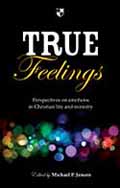
There is no place, it seems, that
feelings do not run high about feelings.
Western civilization is still caught
between adoration of the emotions as
sublime and denigration of them as
merely animal. Can we trust our
feelings? Should we suppress them or
should we indulge them? In what part of
our persons do feelings occur?
Contemporary Christianity is no less
vexed about emotions. The rise of the
charismatic movement in the late
twentieth century, with its emphasis on
experiential Christianity, has led to an
equally strong reaction of suspicion
against talk of the emotions as
significant for the Christian life.
Though these questions have an everyday,
practical importance, they also point to
profound theological questions about the
nature of the triune God and the
ascription of emotions to him in the
Bible. Does God himself have feelings?
This stimulating volume, based on the
2011 Moore College School of Theology,
offers perspectives on emotions. Topics
include a cultural overview, theological
anthropology, the question of divine
passions, the emotional life of Jesus,
the Spirit's work in perfecting
emotions, preaching the Gospels for
divine effects, and the place of the
emotions in corporate worship including
connections with singing and music.
The contributors are Rhys Bezzant, Peter
Bolt, Gerald Bray, Andrew Cameron, Keith
Condie, Richard Gibson, David Höhne,
Michael Jensen, David Peterson and
Robert Smith.
feelings do not run high about feelings.
Western civilization is still caught
between adoration of the emotions as
sublime and denigration of them as
merely animal. Can we trust our
feelings? Should we suppress them or
should we indulge them? In what part of
our persons do feelings occur?
Contemporary Christianity is no less
vexed about emotions. The rise of the
charismatic movement in the late
twentieth century, with its emphasis on
experiential Christianity, has led to an
equally strong reaction of suspicion
against talk of the emotions as
significant for the Christian life.
Though these questions have an everyday,
practical importance, they also point to
profound theological questions about the
nature of the triune God and the
ascription of emotions to him in the
Bible. Does God himself have feelings?
This stimulating volume, based on the
2011 Moore College School of Theology,
offers perspectives on emotions. Topics
include a cultural overview, theological
anthropology, the question of divine
passions, the emotional life of Jesus,
the Spirit's work in perfecting
emotions, preaching the Gospels for
divine effects, and the place of the
emotions in corporate worship including
connections with singing and music.
The contributors are Rhys Bezzant, Peter
Bolt, Gerald Bray, Andrew Cameron, Keith
Condie, Richard Gibson, David Höhne,
Michael Jensen, David Peterson and
Robert Smith.